Extraordinary Women Who Were Also Cyclists: Marie Curie – Škoda We Love Cycling
In a world where the contributions of women have often been overlooked, the legacy of Marie Curie stands as a beacon of inspiration. A pioneer in the field of radioactivity, Curie’s groundbreaking scientific work earned her two Nobel Prizes, making her the first woman to achieve such an honor. Yet, what many may not know is that this exceptional scientist also embraced cycling as a means of both transport and escape. In an era when women were just beginning to break free from societal constraints, Curie’s passion for cycling reflected her independent spirit and determination to defy conventions. This article explores the remarkable life of Marie Curie, highlighting not only her scientific achievements but also her adventurous journey on two wheels, shedding light on how cycling intertwined with her groundbreaking work and personal life. Join us as we celebrate the fusion of intellect and physicality in the life of one of the most extraordinary women in history.
Celebrating Pioneer Spirit: How Marie Curie Redefined Women in Science and Cycling
Marie Curie, a name synonymous with groundbreaking scientific exploration, was not only a trailblazer in radioactivity but also a fervent advocate for women’s rights in academia. Her achievements shattered glass ceilings, demonstrating that determination and intellect know no gender boundaries. As she famously said, “Nothing in life is to be feared, only understood,” embodying the spirit of a pioneer who sought knowledge and truth. Curie’s indelible impact on science paved the way for future generations of women, inspiring them to pursue careers in fields once deemed inappropriate. Through her legacy, she transformed perceptions of women in science, proving that excellence knows no gender.
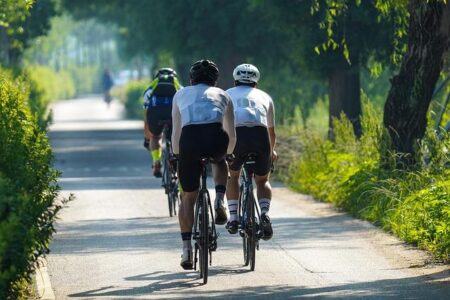
Interestingly, Curie also embraced cycling as a means of transportation and exploration. This choice reflects her belief in engaging with the world beyond the laboratory. Cycling, for Curie, was not merely a physical activity; it was a form of liberation, a way to break away from societal constraints. Many women of her era faced restrictions and were discouraged from pursuing hobbies outside domesticity. By choosing to cycle, Curie made a statement about freedom and empowerment. This duality of being a scientist and a cyclist is captured in her life, showcasing how diverse pursuits can complement and enrich professional achievements. In contexts where women’s contributions were often overshadowed, Curie’s multifaceted existence echoed the notion that women can excel in both science and the pursuits they love.
The Intersection of Science and Sport: Lessons from Curie’s Cycling Journey
Marie Curie, celebrated for her groundbreaking research in radioactivity, was also an avid cyclist whose passion for biking mirrors her relentless pursuit of scientific knowledge. Cycling, often seen as a leisurely activity, played a critical role in sharpening her focus and resilience, traits essential for her prolific studies. This blend of sport and science illustrates a vital lesson: physical activity not only boosts mental clarity but also cultivates the perseverance required to tackle complex challenges. In her cyclical excursions, Curie likely drew parallels between the rhythmic nature of pedaling and the systematic approach needed for conducting experiments.
Moreover, Curie’s cycling expeditions contributed to her holistic well-being, showcasing the importance of balancing mental and physical health. Engaging with the outdoors while cycling allowed her to recharge and foster creativity, proving essential during arduous laboratory hours. This intersection of science and sport offers invaluable insights for today’s aspiring women in STEM fields, emphasizing the need for a diverse approach to developing both body and mind. As Curie demonstrated, a bike ride can transport one not just across landscapes but also into new realms of thought and innovation.
Empowering Women Through Cycling: Recommendations Inspired by Marie Curie’s Legacy
Marie Curie, a pioneering physicist and chemist, broke barriers in the scientific community, and her legacy continues to inspire women across various fields. Emulating her spirit of determination and resilience, cycling serves as a powerful platform for women to embrace their independence and explore the world. Encouraging cycling among women not only promotes physical health but also fosters a sense of community and empowerment. As Curie once said, “Nothing in life is to be feared, it is only to be understood.” In this spirit, initiatives that combine cycling with education can help women expand their horizons and build confidence.
To harness the empowering potential of cycling, consider the following recommendations:
- Organize women-only cycling events: Create safe spaces for women to connect, share experiences, and build skills.
- Host workshops and seminars: Focus on topics like bike maintenance, road safety, and the physical benefits of cycling.
- Collaborate with local organizations: Partner with community groups to provide resources and support for women cyclists.
- Encourage advocacy: Help women engage in local cycling advocacy efforts that promote infrastructure for cyclists.
Consider implementing a support system that pairs experienced cyclists with beginners, fostering mentorship and knowledge exchange. A table showcasing successful women cyclists and their contributions can serve as motivating examples:
| Name | Contribution |
|---|---|
| Marie Curie | First woman to win a Nobel Prize in two different sciences |
| Buffy Miller | Pioneering advocate for women’s cycling rights |
| Sarah Storey | Multiple Paralympic champion and cycling ambassador |
Future Outlook
In conclusion, the legacy of Marie Curie extends far beyond her groundbreaking scientific achievements; it is also enriched by her passion for cycling, symbolizing her resilient spirit and commitment to breaking barriers. As we celebrate extraordinary women like Curie, we recognize that their contributions to both science and sport inspire future generations to pursue their dreams with fervor. Initiatives like Škoda’s “We Love Cycling” remind us that the roads traveled by these pioneers-whether on two wheels or in the laboratory-pave the way for new discoveries and advancements. By honoring their journeys, we celebrate a legacy of empowerment and resilience, reminding ourselves of the remarkable ways in which women continue to shape our world.